The Gotcha Story

Gotcha stories.


“Mankind is gone,” the girl said, looking out over the ruined city. They had stopped the alien war machines, but not before they had killed all the teaming billions of Earth. Save for the last two humans. “What shall we do?” she said, looking up at the tall man by her side.

“We shall rebuild, Eve,” Adam said. “And our children will inherit the Earth.


The last two survivors of the apocalypse were… ADAM AND EVE? WHAT A TWIST!


Yeah, it’s the gotcha story, where something happens at the end of the story to change everything. I’m actually writing a short story with a “gotcha” in it. Done right, it can be a fun little story, but done wrong, or at least overdone…


Well, there’s a reason Analog has in the past specifically called out the “Adam and Eve” twist as something you shouldn’t even bother submitting. It was getting old in the 1950s, and it’s really, really old now. Even some of the variants, like the excellent “Adam and No Eve” by Alfred Bester, very much exceptions to the rule.  It’d be hard to come up with anything like that.


Now a good gotcha story can be pretty nice. In some respects, Charlie Stross’s “Missile Gap” is just such a story where you find out in the end that things were quite different than what the main characters (and you) assumed.


Horror is often a good place for the gotcha—the nice lady is actually a ghost, or you were dead all along. Good times.


So when shouldn’t you use a gotcha story?  Well, if you suddenly noticed a spate of them, don’t. The gotcha works because the reader is either fooled—or is willing to go along with the idea of the characters being fooled. If every other ebook on Amazon is putting out the new “it was the microwave all along!” story, most people won’t find it amusing—they’ll yawn.


Another case is if your gotcha ending is forcing you to lie to the reader. Now, the entire point of a gotcha ending is everyone makes the wrong assumptions. But, the more you actively ignore things that the reader would have seen, the more they’ll feel cheated at the end. Ideally, a gotcha ending should have enough hints that at the end, the reader isn’t just liking the ending—they’re going back and finding all the little hints that they—and the characters, misjudged.


Just as an example—say the gotcha ending was the other character was dead all along. When writing, you want to ensure that when the gotcha hits, you can go back and see the signs.


For example, nobody responds when the character talks, save for the person who can see them. They don’t interact with other people or things. Maybe it’s shown by the ghost is always running off when someone else shows up. However, the effect is handled well enough so that when the gotcha hits, the reader will go: oh yeah, instead of oh c’mon!

That last is bad for a gotcha story.

So don’t be afraid to try it, but remember:

Adam and Even has been done.

When Editing, Change Your Font!

 It doesn't get mentioned enough. But one thing that happens and happens quickly when you're writing a story is that you get used to the font, you get used to your words, you know what you're talking about. 

And because of that, it's possible to, even if you're doing your best, just miss stuff as you give your masterpiece a read. In fact, this is one reason for editors--a fresh pair of eyes that haven't read the same words ten times and thus just miss the fact that "there" should be "their." 

Now, while there is no substitute for having another set of eyes look at your work, there is one thing you can do, especially in this era of word processing programs.

Change your font, size, and spacing, and see what happens. To use an example from one of my very rough first drafts:

***

The buzz of the alarm woke Alyana up from under her nest of blankets. She yawned once, then reached out and hit the alarm, stilling it.

“It’s early…” a sleepy voice murmured from the other bed.

“No, you didn’t wind your clock up,” Alyana said as she threw the blankets off and walked over to the window, staring out at the rising sun. “If you don’t hurry, you’ll miss breakfast, Dana.”

“Don’t care…” the vaguely person-shaped pile of blankets said. 

“How late were you out last night?” Alyana asked. She ran her fingers through her dark hair, pulling it over her shoulder. 

Vs. 

The buzz of the alarm woke Alyana up from under her nest of blankets. She yawned once, then reached out and hit the alarm, stilling it.

“It’s early…” a sleepy voice murmured from the other bed.

“No, you didn’t wind your clock up,” Alyana said as she threw the blankets off and walked over to the window, staring out at the rising sun. “If you don’t hurry, you’ll miss breakfast, Dana.”

“Don’t care…” the vaguely person-shaped pile of blankets said. 

“How late were you out last night?” Alyana asked. She ran her fingers through her dark hair, pulling it over her shoulder. 

***

The two passages look completely different and thus, your eyes aren't just going to pass over them because they've seen those words a million times. There's a subconscious "hold on a moment" going on that lets you see, at least partially, your work as new again. 

If you want to get wild, you can always change the color of your words. I know some writers who do that, but others find it unhelpful and actually annoying. That gets into personal preference, but if you find bright pink to call out the inner detective in your editing sense, go for it. That's the lovely thing about modern computers--it doesn't cost you anything other than one or two keystrokes. 

So go crazy!  Set your second read text to 18 point Helvetica Bold and see what happens!

The Single Most Important Writing Tip

 From President Calvin Coolidge:


“Nothing in this world can take the place of persistence. Talent will not; nothing is more common than unsuccessful men with talent. Genius will not; unrewarded genius is almost a proverb. Education will not; the world is full of educated derelicts. Persistence and determination alone are omnipotent. The slogan Press On! has solved and always will solve the problems of the human race.”

You will find nothing more important. Wonder how that guy who doesn't write nearly as well as others ends up on the top 100? He's probably been ramming his head against the wall until he managed to push through.

Wonder why the guy who can write a page that reads like God himself wrote it hasn't published a thing? Because he didn't push through and is waiting for "Something" to happen to make his writing good enough. And it'll never be good enough. 

Keep pushing. Because only by pushing through will you find success.


I hate setting up social media. (And how it relates to writing)

 I know I have to do it. It's vital for well, just about any business these days. But it's terrible and I feel like I'm going to make a mistake and get yelled at for accidentally spamming everyone in China with an offer for a sex product that I didn't even type in.


But this is an interesting point to consider as a writer. The people who were born in the 2000s have never really experienced a time when social media wasn't a thing. There are adults living today who have never been out of immediate reach of Twitter, or the Internet, or Wiki to provide them with wisdom. 

Well, a certain value of wisdom. But if we're writing, especially fiction set in the present, that has to be taken into account. Why isn't the kid calling the cops? Why aren't they googling "strange glowing screaming skull that is following us?"  If they go missing, why isn't Dad using the "locate" function for their phones to find out where they are?

The answer can be as varied as the story. But remember--"it works until it is convenient for the story for it to not work and then it doesn't" can be used... once. 

Maybe. 

But your audience will notice if you use that everytime an Internet connection via our heroe's 5G connection would come in handy. 

Now back to setting up social media. Now where is the rabbit I'm supposed to sacrifice...


Check out Daily Writing Tips!

 If you're an author, or just someone who wants to see some neat stuff about the theory and craft of writing, you could do worse than checking out Daily Writing Tips, a blog full of tricks, tips and wisdom, by Maeve Maddox and Mark Nichol. give it a look and you won't be disappointed! 


Daily Writing Tips

Don't talk politics or religion.

 It's happened again. Baen Publishing evidently had an issue with material on one of their forums that has caused an explosion in science fiction fandom, or at least those who follow the Internet drama. 

I'm not going to talk about who is right or wrong, because as far as marketing your books goes--it doesn't matter. 

Pictured: Typical political discussion on an internet forum. 

If you have a forum, you may have a similar problem, unless you follow the wise advice of my Granddad: Don't talk politics or religion.  This doesn't mean that you shouldn't have opinions (though not many people enjoy being preached at) but political forums? No.  

The thing is that debates over politics and religion have winners and losers, even if it's just someone getting tired of the argument. And especially for something important (and most people who argue this type of thing feel it's important) losing, or even winning may leave a bad taste in their mouth. 

A bad taste associated with you.  Maybe enough of a bad taste that they go somewhere else to buy books. 

Not good, is it?

There are plenty of places on the Internet to talk politics, or as happens often, bloviate and howl like a gored hippo. Lots of places not associated with you.  You want people to, as much as possible, walk away from your forums with smiles on their faces, or if they've had an argument, at least not one about subjects that many people consider to be of life and death importance.  

Lastly, this can be especially important to smaller authors. People like us don't have the money to buy big ads, or a widely known publisher brand. Often our online advertising and social media presence is a huge part of our ability to sell things.  And if the first thing a visitor to our forums sees is a screaming argument, complete with the kind of vulgarity that causes soldiers to blush... Well, as they say, you never get a second chance to make a first impression. 

Now there is one exception--if you're a political writer. In that case, having forums that occasionally go off like a strategic nuclear device may actually be a plus. If so, invest in moderators and asbestos gloves--you'll need 'em. 


Of course, this doesn't get into the question of whether or not you should have a native forum, and we'll talk about that later. 

But for now, remember: No politics or religion at the dinner table keeps food fights from breaking out. 


Once more, with feeling.

 Normally, we're not supposed to use vulgrity in social media posts...


But 2020 sucked. 2020 sucked very, very badly.  Which is why you haven't heard much from me. Covid, family issues, monetary issues, rains of fire from the sky, rains of frogs from the sky...

Yeah. It's not been very good.   

So now, we shall try to start again, and we shall start the year on a good note:


Have some kittens

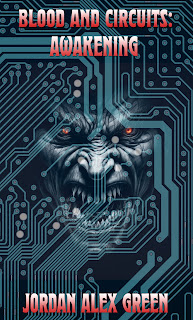
It's Vampires Vs. Killbots in: Blood and Circuits: Awakening

  Click here to Buy or Read From Amazon If you can ’t find a Van Helsing when you need one, how about building yourself a Van Helsing? Aleph...